FM-03Fire-Resistant
Fire Resistant Matting
Fire resistant matting protects floors and surrounding surfaces in areas exposed to heat, sparks and flame. It is built to resist ignition, slow flame spread or withstand spark and heat contact for its intended use.
In hot works settings the right grade depends on the heat and spark source. Below we explain the terms, the materials and the fire classification you should ask for — then send us the details for a recommendation.
In short
Fire resistant matting is flooring built to resist ignition, slow flame spread or withstand spark and heat contact for its intended use; it is the honest term for hot work floors, since no mat is truly fireproof.
Flame-retardant grades
Materials that resist ignition and slow flame spread in hot work areas.
Self-extinguishing options
Grades designed not to sustain a flame once the source is removed.
Heavy-duty build
Hard-wearing construction made for fabrication and welding traffic.
Specified to the source
Matched to radiant heat, direct sparks or molten spatter.
What is fire resistant matting?
Fire resistant matting is flooring protection made to cope with heat, sparks and flame exposure where ordinary matting would scorch, melt or ignite. In hot works it protects the floor beneath welding, grinding and cutting, contains damage and supports the fire precautions around hot work.
Fire resistant vs flame-retardant vs fireproof
"Fireproof" implies nothing burns, which is rarely accurate for matting — avoid treating any mat as fireproof. "Flame-retardant" usually means a material is treated to resist catching alight or to slow burning. "Fire resistant" generally describes the ability to withstand heat and flame exposure, and "self-extinguishing" means it should not sustain a flame once the source is removed. Focus on the stated use case and the product’s certificate rather than the label alone.
| Term | What it means | Honest use |
|---|---|---|
| Fireproof | Implies it cannot burn or be harmed by fire | Avoid — no matting is truly fireproof |
| Fire-resistant | Resists ignition and limits fire damage for its rated use | Accurate for hot-work floor matting |
| Flame-retardant | Treated or built to slow ignition and flame spread | Accurate when describing material behavior |
| Self-extinguishing | Stops burning once the flame source is removed | Accurate only if the product is tested to behave this way |
Fire classification — what to ask for
Ask for test evidence that matches the exact product, thickness and backing you plan to buy. US and Canadian projects may reference ASTM, NFPA, OSHA, provincial or local fire-code requirements, while imported products may also carry EN 13501-1 classifications such as Bfl-s1 or Cfl-s1. These systems are not interchangeable and none guarantees performance during direct molten-metal contact. Confirm the applicable requirement with your facility, insurer or authority having jurisdiction, then request the product-specific report.
Where fire resistant matting is used
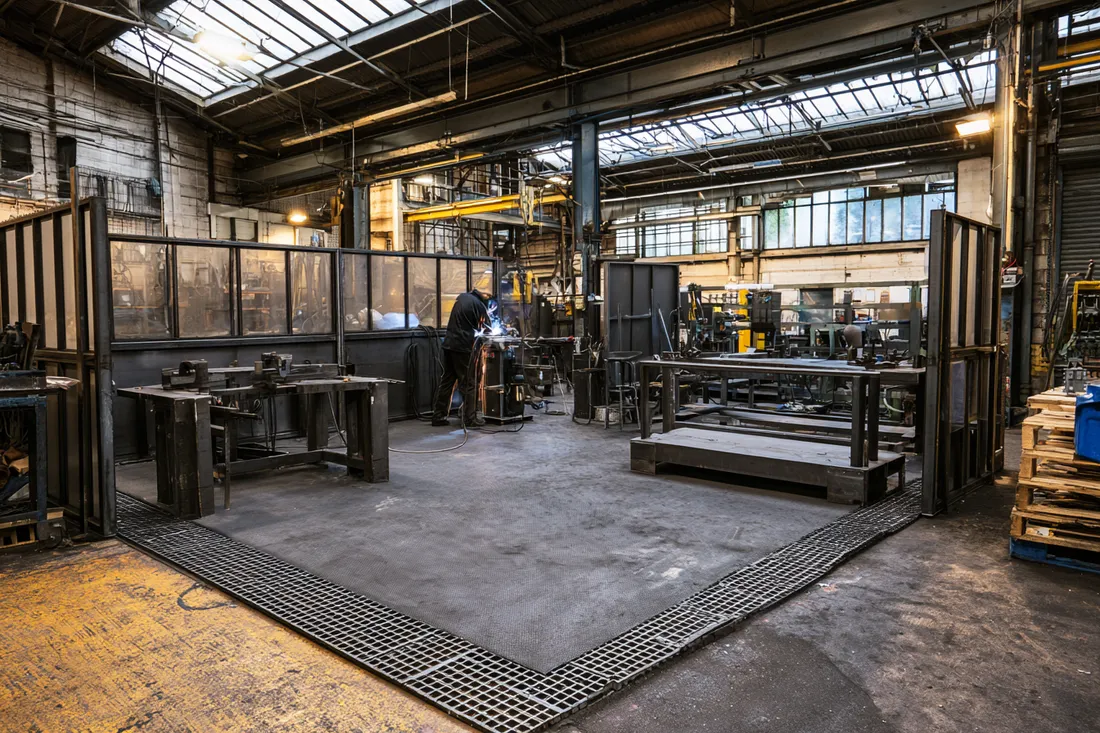
It suits welding and grinding bays, fabrication cells, foundries and metalworking, plant and boiler rooms, and surrounding floor areas near hot work.
How to choose for a hot work area
- Identify the heat source: radiant heat, sparks, or molten spatter.
- For direct welding spatter, pair with a dedicated welding mat.
- For surrounding floor protection, general fire resistant matting fits well.
- Request the product fire classification and confirm it suits the setting.
Care, inspection and replacement
Repeated heat, sparks and heavy traffic degrade any mat over time. Inspect regularly for charring, hardening, cracks or thinning, and replace once protection is compromised. Keep appropriate extinguishing means to hand in hot work areas.
Fire Resistant Matting — questions
Honest answers specific to this matting type.
01What is the difference between fireproof and fire-resistant matting?
"Fireproof" implies nothing burns, which is rarely accurate for matting. Fire-resistant (or flame-retardant) matting is designed to resist ignition, slow flame spread, or withstand sparks and heat for its intended use. Treat fire-resistant as the honest, accurate term and match the mat to the actual heat or spark source.
02What fire classification should I look for?
Use the requirement set by your facility, insurer or authority having jurisdiction. US and Canadian projects may reference ASTM, NFPA, OSHA, provincial or local requirements, while imported products may carry EN 13501-1 classes. Ask for the report covering the exact product and do not treat different test systems as interchangeable.
03Can fire resistant matting be used directly under welding?
For welding spatter and molten metal, a dedicated welding mat is usually the better choice as it targets spark and molten-metal contact. General fire resistant matting suits surrounding floor protection. Tell us the task and we’ll point you to the right product.
04Does fire resistant matting wear out?
Yes. Repeated heat, sparks and heavy traffic degrade any mat over time. Inspect regularly for charring, hardening, cracks or thinning and replace when protection is compromised.
Go deeper before you specify
Fireproof vs Fire-Resistant Matting — What the Words Mean
Why "fireproof" is the wrong word for matting, what fire-resistant, flame-retardant and self-extinguishing actually mean, and the classification to ask for instead.
Read guideWhat Fire Rating Should Welding Mats Have? A Buyer's Checklist
A practical checklist for translating a welding mat's fire classification into a real buying decision — what to request, what a class does and doesn't cover, and what else to specify alongside it.
Read guideFire Classification for Flooring Explained: EN 13501-1 for Buyers
What EN 13501-1 floor classes (Afl–Ffl, s1/s2) actually mean, what they don't guarantee, and exactly what to request from your matting supplier.
Read guideCfl-s1 vs Bfl-s1 — What's the Difference and When Do You Need the Higher Class?
An honest comparison of the Cfl-s1 and Bfl-s1 flooring fire classes, how EN 13501-1 separates them, and when specifying the higher Bfl class is worth it for hot work.
Read guideWhat Temperature Can a Welding Mat Withstand?
An honest explainer on welding-mat heat ratings: why there is no standardized floor-mat temperature figure, how continuous, peak and spatter-contact heat differ, and what documentation to request.
Read guideFoundry Floor Protection: Matting for Molten Metal & Hot Work
What floor matting can and can't do in a foundry — protecting standing and surrounding areas from sparks, spatter and radiant heat, and where engineered protection is needed instead.
Read guideFire-Resistant Matting Suppliers in the USA and Canada
How to compare fire-resistant and welding mat suppliers serving the United States and Canada by testing, application, stock, delivery and product evidence.
Read guideAnti-Fatigue Matting Alternatives for Fire-Resistant Hot Works Areas
When standard anti-fatigue matting may be enough, when you need a fire-resistant or flame-retardant anti-fatigue grade instead, and what to verify before buying either.
Read guideWelding Bay Flooring Layout Guide
How to plan the physical layout of welding bay flooring — station positions, access routes, gas bottle storage and phased installation across a multi-station bay.
Read guideCompare nearby options
 FM-01Welding Mats
Welding Mats
Spark-, spatter- and heat-resistant welding floor mats to protect floors and surfaces during welding, grinding and cutting.
View matting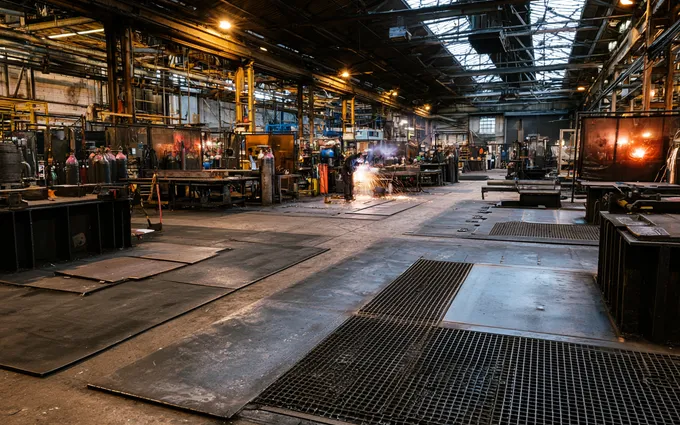 FM-02Hot Works
Hot Works Matting
The hub for welding, grinding and cutting floor protection — fire-resistant matting that handles sparks, spatter and slag.
View matting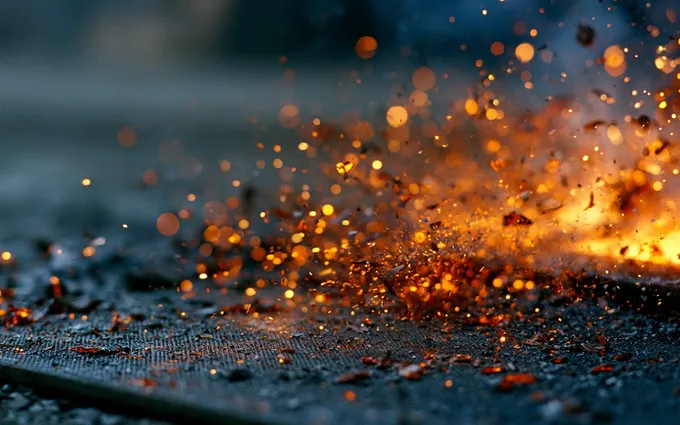 FM-03Spark-Resistant
Spark Resistant Matting
Floor protection built to take sparks, spatter and hot fragments from welding, grinding and cutting.
View matting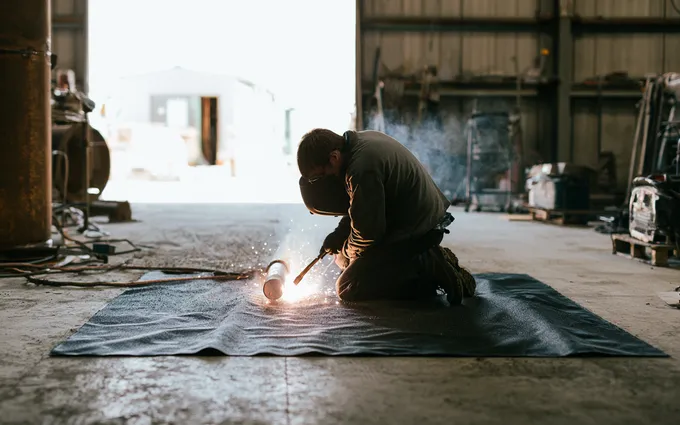 FM-04Temporary
Temporary Hot Work Floor Protection
Portable, fire-resistant floor protection for site hot works, maintenance and hot work permit areas.
View matting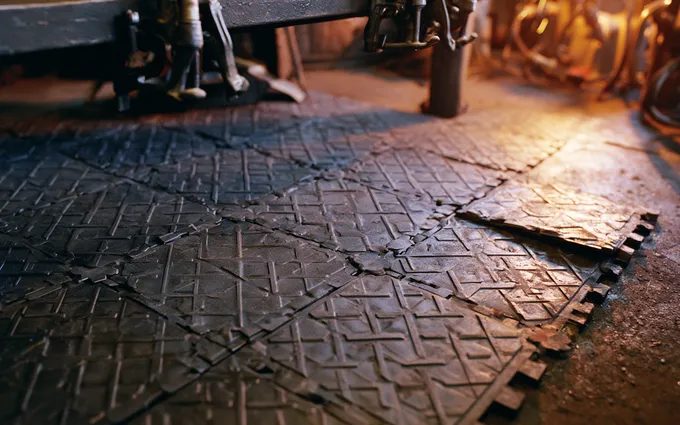 FM-05Welding Bay
Welding Bay Flooring
Fire-resistant mats and replaceable tiles to lay out a welding bay or fabrication cell floor.
View matting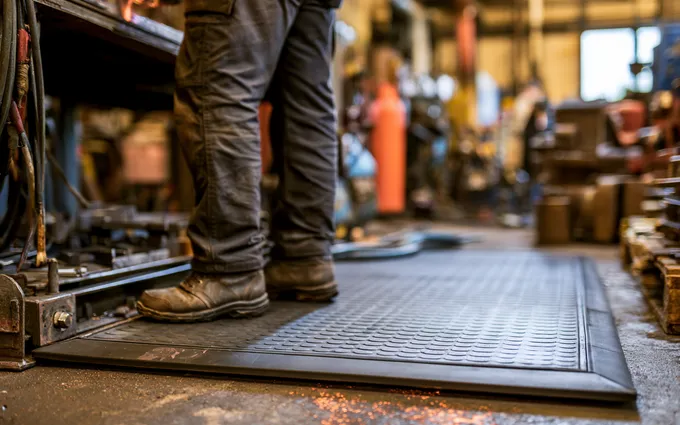 FM-06Anti-Fatigue
Flame-Retardant Anti-Fatigue Mats
Cushioned, spark-resistant matting to ease long welding and fabrication shifts without the fire risk of standard foam.
View mattingQuotes & specification help
Need a documented fire classification?
Tell us the heat and spark exposure, the area, and any classification your site or insurer specifies — we'll help you request the right certificate for the product you choose.