FM-13Safety
Workplace Safety Mats for Hot Work Areas
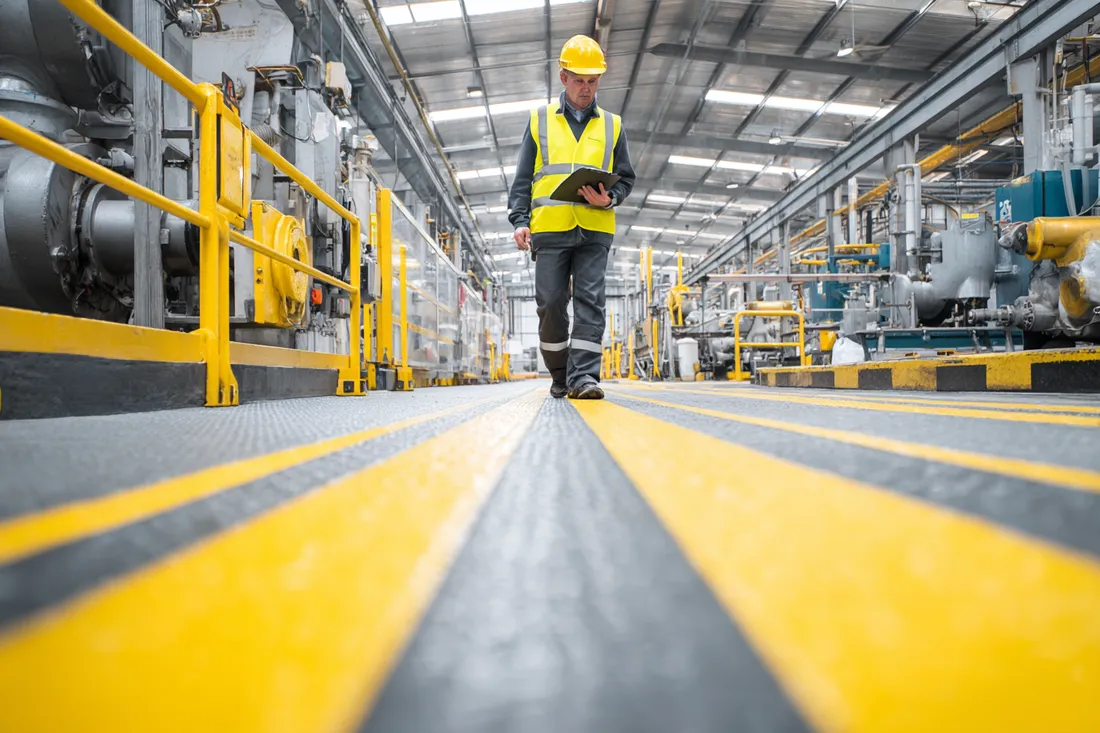
In welding and fabrication areas, the main floor risks are sparks and fire, slips from dust and coolant, and fatigue from long standing shifts. Workplace safety mats match matting to those specific risks.
Matting forms part of a wider risk-control approach alongside hot work permits, cleaning and housekeeping — it does not replace a risk assessment.
Risk-matched
Matting matched to spark, slip and fatigue risks.
Hot-work focused
Fire-resistant grades where welding and grinding happen.
Part of wider control
Supports permits and risk assessment, not a replacement.
Specified to the risk
Practical guidance to choose the right mat for the hazard.
Safety matting in hot work areas
In welding and fabrication, the floor-related risks are sparks and fire, slips from grinding dust, oil and coolant, and fatigue from prolonged standing. Safety matting addresses each with a different surface — fire-resistant, anti-slip or anti-fatigue.
Matting supports wider controls
Matting is one control among several. In hot work it sits alongside the hot work permit, fire watch, removing combustibles and extinguishing means. Assess the risk first, then choose matting to suit it — never treat a mat as the whole solution.
How to choose for a specific risk
- Sparks and fire: fire-resistant or flame-retardant matting.
- Slips from dust and coolant: anti-slip and drainage matting.
- Standing fatigue: flame-retardant anti-fatigue matting.
- Confirm the product suits the risk and request certificates.
Workplace Safety Mats for Hot Work Areas — questions
Honest answers specific to this matting type.
01How do safety mats fit with a hot work permit?
Matting can address the floor-protection and slip/fatigue risks, but it sits within wider controls — the permit, fire watch, clearing combustibles and extinguishing means. Assess the risk first, then choose matting to suit; it doesn’t replace the permit or risk assessment.
02Can one safety mat cover sparks, slips and fatigue?
Some mats combine properties — for example flame-retardant anti-fatigue — but no single mat covers every risk. Prioritise the main hazard in each area. We can recommend combined-function options where they fit.
03How often should safety mats be checked?
Inspect regularly for wear, curling edges, hardening, burn-through and loss of grip or cushioning. Frequency depends on the area and exposure. Replace mats once they no longer perform their safety function.
Go deeper before you specify
Workplace Safety Matting Checklist for Health & Safety Managers
A practical checklist for health and safety managers to audit matting against the real floor risks in a welding or fabrication site — sparks, slips and fatigue.
Read guideWorkplace Safety Matting and Hot Works Risk Assessments
How floor protection fits into a hot works risk assessment, what to record about matting, and when to review it — for health and safety managers.
Read guideCompare nearby options
 FM-01Hot Works
Hot Works Matting
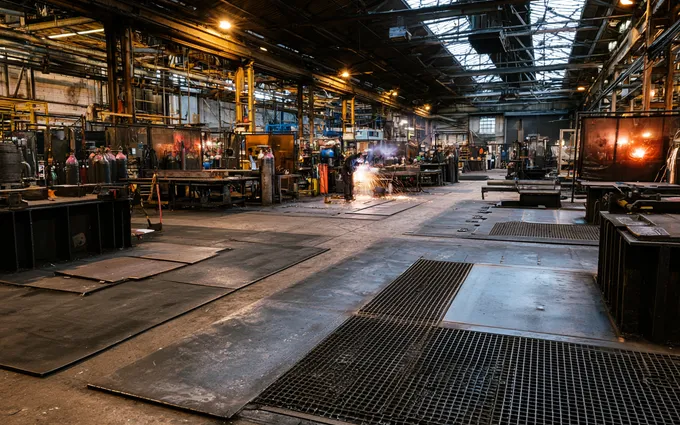
The hub for welding, grinding and cutting floor protection — fire-resistant matting that handles sparks, spatter and slag.
View matting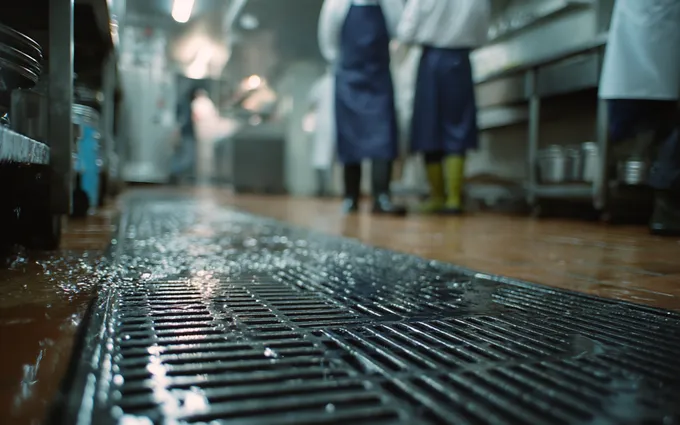 FM-02Anti-Slip
Anti-Slip Mats for Welding & Fabrication Areas
Grip underfoot for fabrication and welding floors that collect grinding dust, oil, coolant and water.
View matting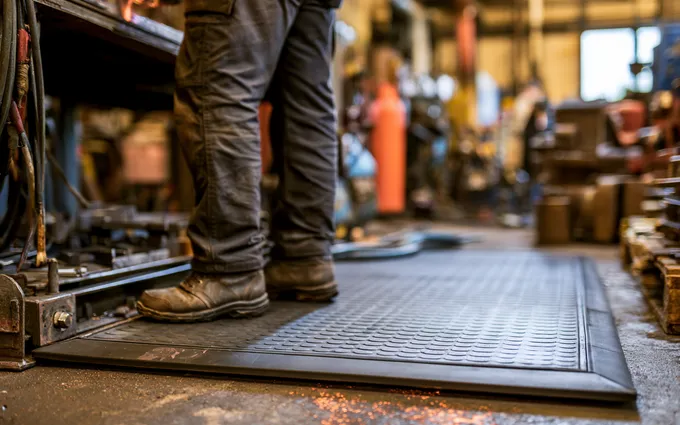 FM-03Anti-Fatigue
Flame-Retardant Anti-Fatigue Mats
Cushioned, spark-resistant matting to ease long welding and fabrication shifts without the fire risk of standard foam.
View matting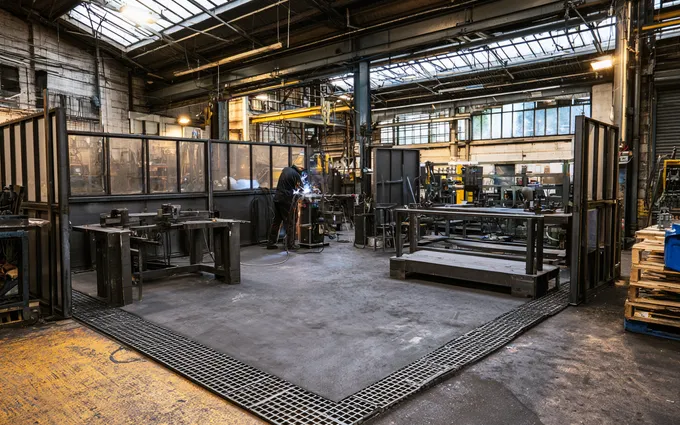 FM-04Fire-Resistant
Fire Resistant Matting
Flame-retardant, self-extinguishing floor matting for welding bays, fabrication shops, foundries and other hot work areas.
View mattingQuotes & specification help
Tell us about your hot work area.
Welding bay, grinding station, fabrication cell or temporary site hot work — send the process, area size and any oil, coolant or fire-classification requirement. We’ll help specify spark-resistant floor protection.