FM-08Anti-Fatigue
Flame-Retardant Anti-Fatigue Mats
Welders and fabricators often stand in one spot for long shifts. Flame-retardant anti-fatigue mats ease that standing fatigue while resisting the sparks and spatter that would scorch or degrade standard foam matting.
They pair comfort underfoot with spark resistance, so you don’t have to choose between a safe hot-work surface and a comfortable one. Below is how to choose for a welding or grinding station.
In short
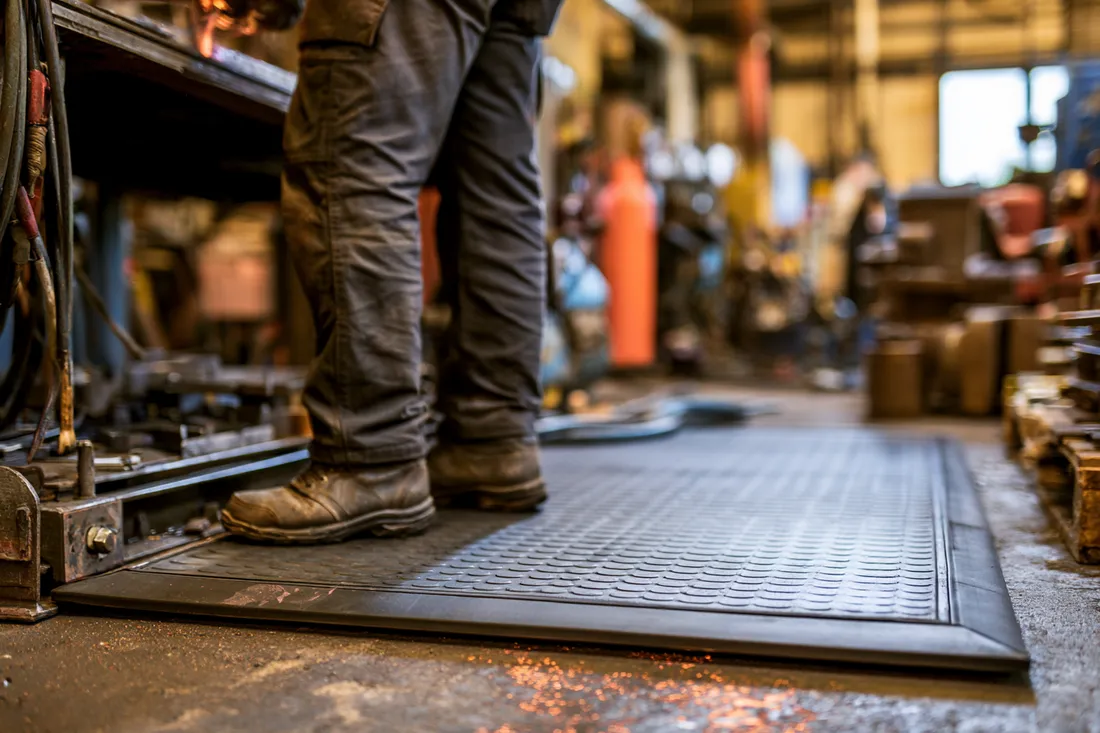
Flame-retardant anti-fatigue mats ease standing fatigue on long welding and fabrication shifts while resisting the sparks and spatter that would scorch or degrade standard foam matting.
Eases long shifts
Cushioned surface for welders and fabricators who stand for hours.
Flame-retardant
Resists sparks and spatter where standard foam would scorch.
Beveled edges
Tapered edges to reduce trip risk around the station.
Hot-work suited
Designed for welding bays and grinding stations, not just dry benches.
Why standard anti-fatigue mats aren’t enough for hot work
Standard foam anti-fatigue mats are made for comfort, not for sparks. Near welding and grinding they can scorch, melt or degrade quickly. A flame-retardant grade keeps the comfort benefit while resisting the sparks and spatter of hot work.
How anti-fatigue matting helps
Anti-fatigue matting provides a slightly compressible surface that encourages small leg and foot movements during prolonged standing, which can reduce discomfort. It is one part of good workstation ergonomics — pair it with sensible breaks and suitable footwear.
Key features to look for
Spark resistance and material
Confirm the mat is flame-retardant or self-extinguishing for the hot work involved, and ask for the product’s classification.
Cushioning, thickness and edges
A moderate thickness suits most standing tasks; beveled edges reduce trip risk. Keep mats flat and replace any with curling edges.
How to choose
- Confirm a flame-retardant grade for the welding or grinding area.
- Match thickness to the task — moderate cushioning for most stations.
- Choose beveled edges and the right size for the work zone.
- Request the product fire classification and certificate.
Flame-Retardant Anti-Fatigue Mats — questions
Honest answers specific to this matting type.
01What is a flame-retardant anti-fatigue mat?
It’s an anti-fatigue mat made from materials that resist sparks and flame, so it can be used where welding or grinding would scorch standard foam. It eases standing fatigue while suiting a hot work area. Ask for the product’s fire classification to confirm it suits your station.
02Can I use a normal anti-fatigue mat in a welding bay?
It’s not advisable. Standard foam mats can scorch, melt or degrade near sparks and spatter. Use a flame-retardant grade designed for hot work, and match it to the spark exposure at the station.
03Do anti-fatigue mats help on long welding shifts?
Many people find prolonged standing more comfortable on anti-fatigue matting, which is helpful across long welding and fabrication shifts. It isn’t a medical treatment and comfort varies by person — use it alongside breaks and good footwear.
04Are these mats fireproof?
No mat is truly fireproof. Flame-retardant anti-fatigue mats resist sparks and flame for their intended use. Match the grade to the hot work and keep extinguishing means to hand.
Go deeper before you specify
Anti-Fatigue Mats for Welders & Long Shifts
Why standard anti-fatigue foam isn't safe near sparks, and how to choose a flame-retardant anti-fatigue mat for welding and grinding stations.
Read guideAnti-Fatigue Matting Alternatives for Fire-Resistant Hot Works Areas
When standard anti-fatigue matting may be enough, when you need a fire-resistant or flame-retardant anti-fatigue grade instead, and what to verify before buying either.
Read guideCompare nearby options
 FM-01Grinding
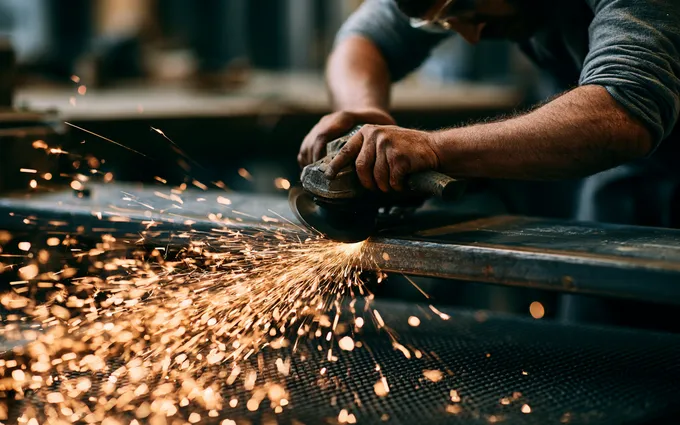
Grinding Station Mats
Floor protection for grinding stations — spark spray, abrasive dust, slip risk and long standing shifts.
View matting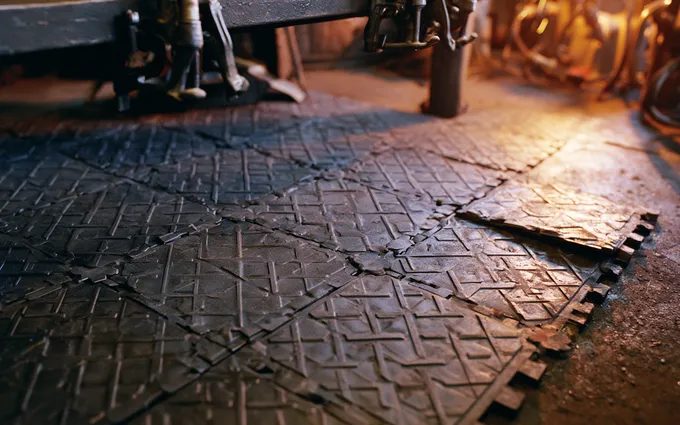 FM-02Welding Bay
Welding Bay Flooring
Fire-resistant mats and replaceable tiles to lay out a welding bay or fabrication cell floor.
View matting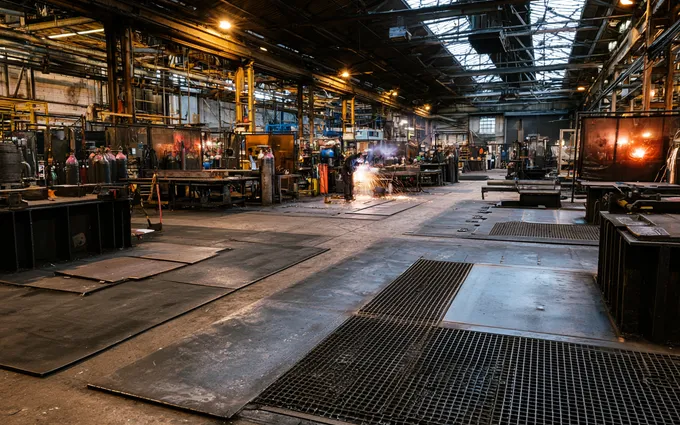 FM-03Hot Works
Hot Works Matting
The hub for welding, grinding and cutting floor protection — fire-resistant matting that handles sparks, spatter and slag.
View matting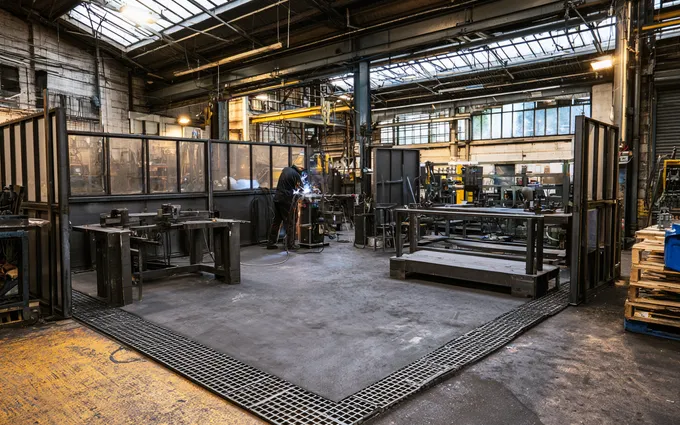 FM-04Fire-Resistant
Fire Resistant Matting
Flame-retardant, self-extinguishing floor matting for welding bays, fabrication shops, foundries and other hot work areas.
View mattingQuotes & specification help
Comfort and fire resistance don't have to compete.
Send the station, standing time, and nearby spark or spatter exposure — we'll help you find a grade that's both comfortable and rated for the hazard.