FM-06Plasma Cutting
Plasma Cutting & Thermal Cutting Mats
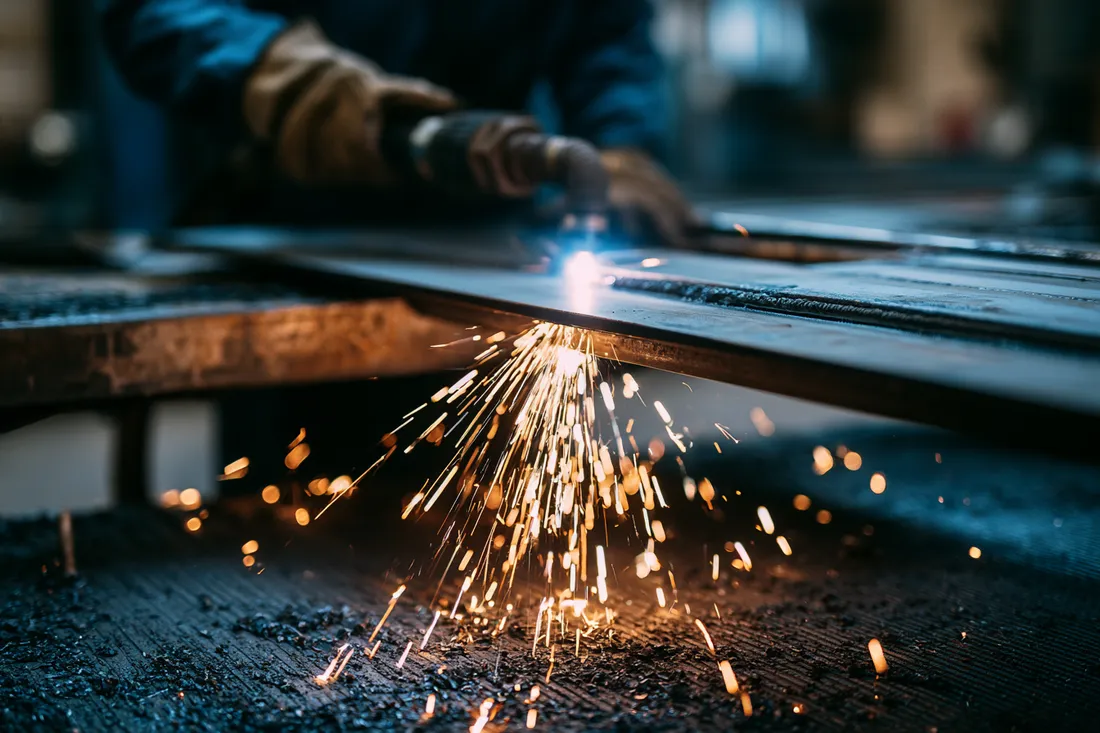
Plasma and thermal cutting throw molten dross and sparks that travel and fall further than the spatter from arc welding, so the floor around a cutting station or table needs protecting across a wider zone. Plasma cutting mats are fire-resistant matting laid to take that molten splash and protect the floor beneath and around the cut.
This is a distinct hazard from close-in welding: cutting removes metal, and the dross that drops through and around the cut is hot and mobile. Below we cover how the hazard differs, how far it can reach, and how to specify matting for a cutting station.
In short
Plasma cutting mats are fire-resistant floor matting for plasma and thermal cutting, where molten dross and sparks travel and fall further than arc-welding spatter — so protect the cutting table footprint and a wider surrounding zone, and specify against the product’s datasheet.
Molten dross resistant
Built to take the hot dross and splash that cutting drops onto the floor.
Sized to the table
Coverage matched to the cutting table footprint and a wider spray zone.
Fire-resistant grades
Flame-retardant or self-extinguishing materials for their intended use.
Datasheet-led
Specify against the product’s classification and datasheet, not a label.
How is plasma cutting different from welding for the floor?
Plasma and thermal cutting sever metal rather than joining it, so molten dross is blown and dropped through and around the cut. Compared with arc welding — where spatter lands close to the work — cutting dross is hotter, heavier and travels further, so it puts a wider area of floor at risk.
| Process | What reaches the floor | Floor protection to consider |
|---|---|---|
| Arc welding (MIG / TIG / MMA) | Spatter and sparks close to the work | Welding mat under and around the immediate work |
| Plasma / thermal cutting | Molten dross and sparks that travel and fall further | Fire-resistant matting sized to the table footprint and a wider spray zone |
| Grinding & disc cutting | Wide spark spray and abrasive dust | Spark-resistant matting across the full spray pattern |
How far do plasma cutting sparks and dross travel?
NFPA 51B hot-work guidance calls for moving or protecting combustibles within 35 ft (10.7 m) of the work. That is a combustible-control distance, not a promise about spark travel or a substitute for observing your process. Size floor protection for where dross and sparks actually land, then confirm the layout against your facility requirements and site-specific assessment.
The practical point for the floor is coverage: protect well beyond the cut itself, not just directly under the table. Where the surrounding area matters, extend protection with hot works matting and keep combustibles out of the spray zone.
What matting suits a plasma cutting station or table?
For a cutting station, choose fire-resistant matting rated for molten contact and size it to the table footprint plus the wider zone where dross falls and rolls. Confirm the grade against the product’s datasheet and reaction-to-fire classification rather than a label, and ask the supplier for the certificate for the exact product.
- Match the material to direct molten-dross contact, not just stray sparks.
- Size coverage to the table footprint and the wider dross-travel zone.
- Keep the area swept — pooled dross and offcuts are a fire and trip risk.
- Request the product’s fire classification and datasheet before specifying.
Is plasma cutting matting fireproof?
No matting is truly fireproof. Plasma cutting mats are fire-resistant, flame-retardant or self-extinguishing for their intended use — they resist ignition and molten contact within a rated range, but cutting produces intense, concentrated heat and any material has limits. Use the mat within its stated limits, keep extinguishing means to hand, and follow your hot work permit and fire watch.
Plasma Cutting & Thermal Cutting Mats — questions
Honest answers specific to this matting type.
01What matting should I use for a plasma cutting station?
Use fire-resistant matting rated for molten dross, sized to the cutting table footprint and the wider area where dross falls and travels. Confirm the grade against the product datasheet and reaction-to-fire classification, and request the certificate. Tell us the table size and process and we’ll help specify.
02Why does plasma cutting need more floor coverage than welding?
Cutting removes metal, so hot molten dross is blown and dropped through and around the cut and travels further than close-in welding spatter. That puts a wider area of floor at risk, so coverage should extend beyond the table rather than sitting only directly under the cut.
03How far does plasma cutting dross travel?
There is no universal distance. NFPA 51B uses 35 ft (10.7 m) as a combustible-control distance for hot work, but that is not a prediction of dross travel. Observe the process, protect where dross actually lands and follow your facility requirements.
04Is any plasma cutting mat fireproof?
No mat is truly fireproof. Plasma cutting mats are fire-resistant or flame-retardant for their intended use and have rated limits. Keep the area clear of combustibles, keep extinguishing means to hand, and use the mat alongside a hot work permit and fire watch.
Go deeper before you specify
Plasma Cutting Floor Protection: A Buyer's Guide
How to protect floors around a plasma or thermal cutting table, why molten dross behaves differently to weld spatter, and how to specify the right matting.
Read guideDo Welding Sparks and Slag Damage Concrete Floors?
How welding sparks, spatter and slag affect concrete, epoxy, vinyl and timber floors — and how flame-resisting matting protects the substrate and supports a hot work permit.
Read guideHow Far Do Welding and Grinding Sparks Travel — And How Big a Floor Zone Should You Protect?
How far welding spatter and grinding sparks reach, the US 35 ft vs UK ~10 m clearance-zone rules, and how to translate that zone into mat sizing and combustible-floor protection.
Read guideCompare nearby options
 FM-01Grinding
Grinding Station Mats
Floor protection for grinding stations — spark spray, abrasive dust, slip risk and long standing shifts.
View matting FM-02Welding Mats
Welding Mats
Spark-, spatter- and heat-resistant welding floor mats to protect floors and surfaces during welding, grinding and cutting.
View matting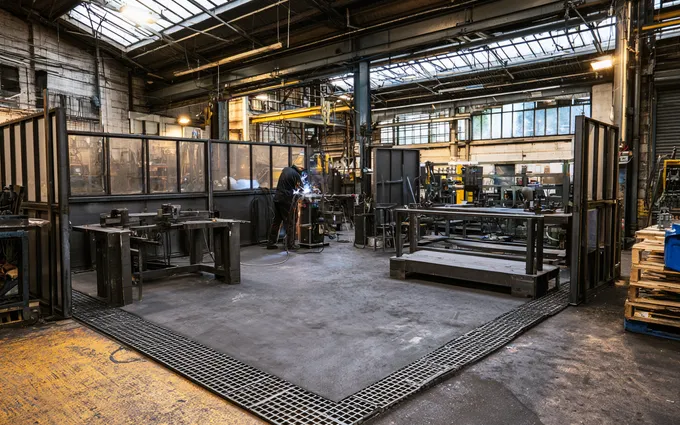 FM-03Fire-Resistant
Fire Resistant Matting
Flame-retardant, self-extinguishing floor matting for welding bays, fabrication shops, foundries and other hot work areas.
View matting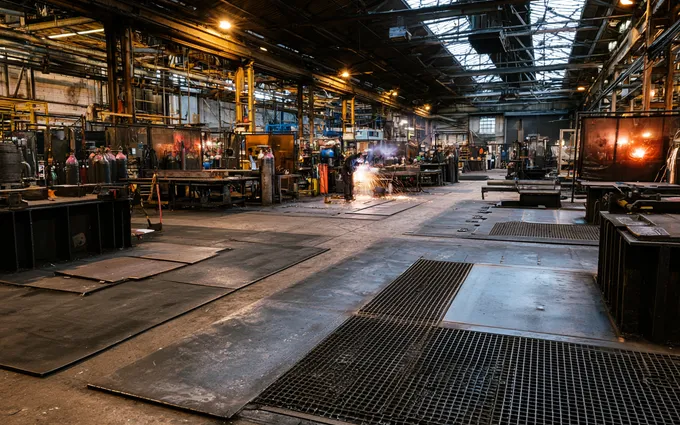 FM-04Hot Works
Hot Works Matting
The hub for welding, grinding and cutting floor protection — fire-resistant matting that handles sparks, spatter and slag.
View matting FM-05Spark-Resistant
Spark Resistant Matting
Floor protection built to take sparks, spatter and hot fragments from welding, grinding and cutting.
View mattingQuotes & specification help
Cutting produces more reach than welding.
Send the process, table height and material, and we'll help you size fire-resistant coverage beyond the table itself, where dross actually falls.